
01DESIGN CHALLENGE
Design the creature for Guillermo del Toro's new fantasy-horror film, Preposterous. The creature must be an Animal-Machine Hybrid that evokes both disgust and empathy, appearing realistic and fantasy.
02 RESEARCH
Guillermo del Toro is a highly imaginative Mexican film director, renowned for his unique dark fantasy aesthetic, deep affection for crafting monster characters, and lavish visual style.
Core Aesthetic: Infusing visual beauty into the grotesque. The design should be horrific but in an appealing way.
Design Approach: Strong connection to fantasy stories and horror, also combining different organisms. The goal is a unique, believable hybrid.
Design Approach: Strong connection to fantasy stories and horror, also combining different organisms. The goal is a unique, believable hybrid.
03 INITIAL AI character design ATTEMPT
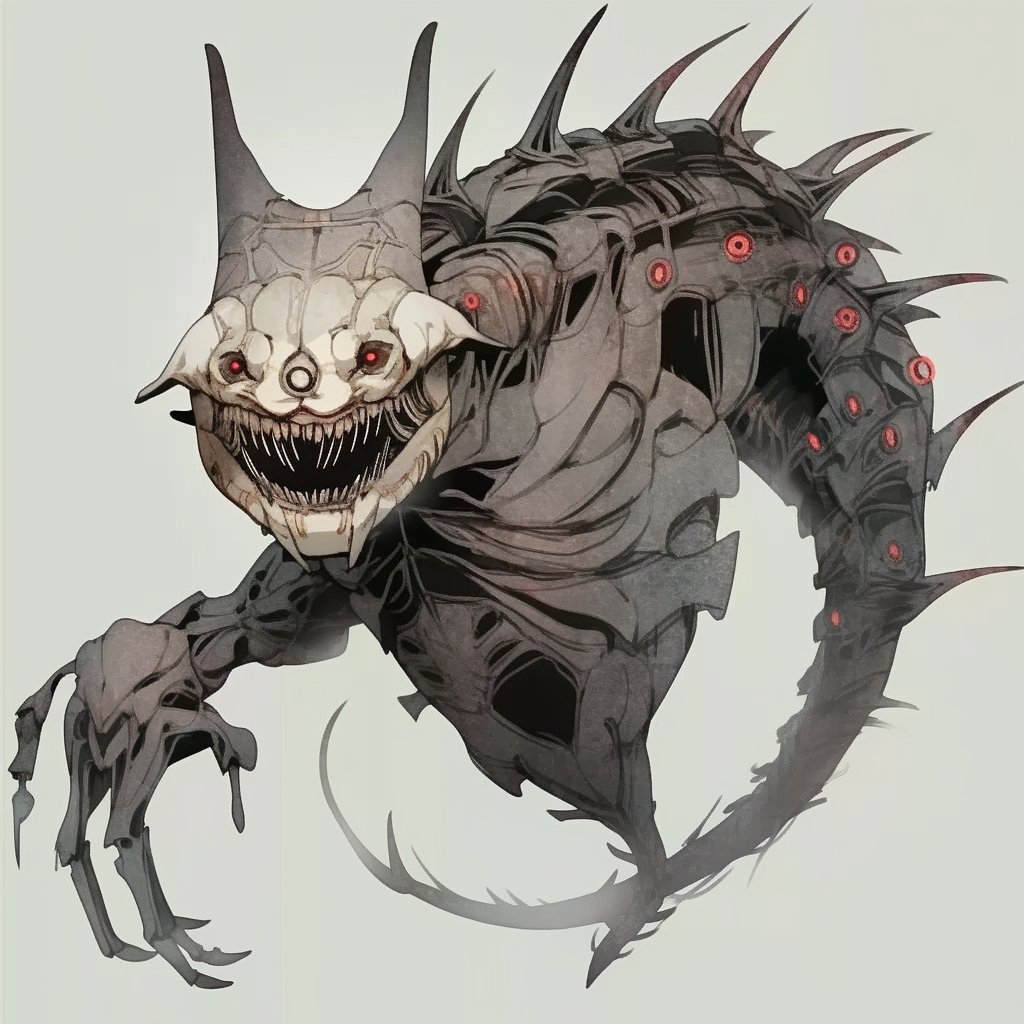
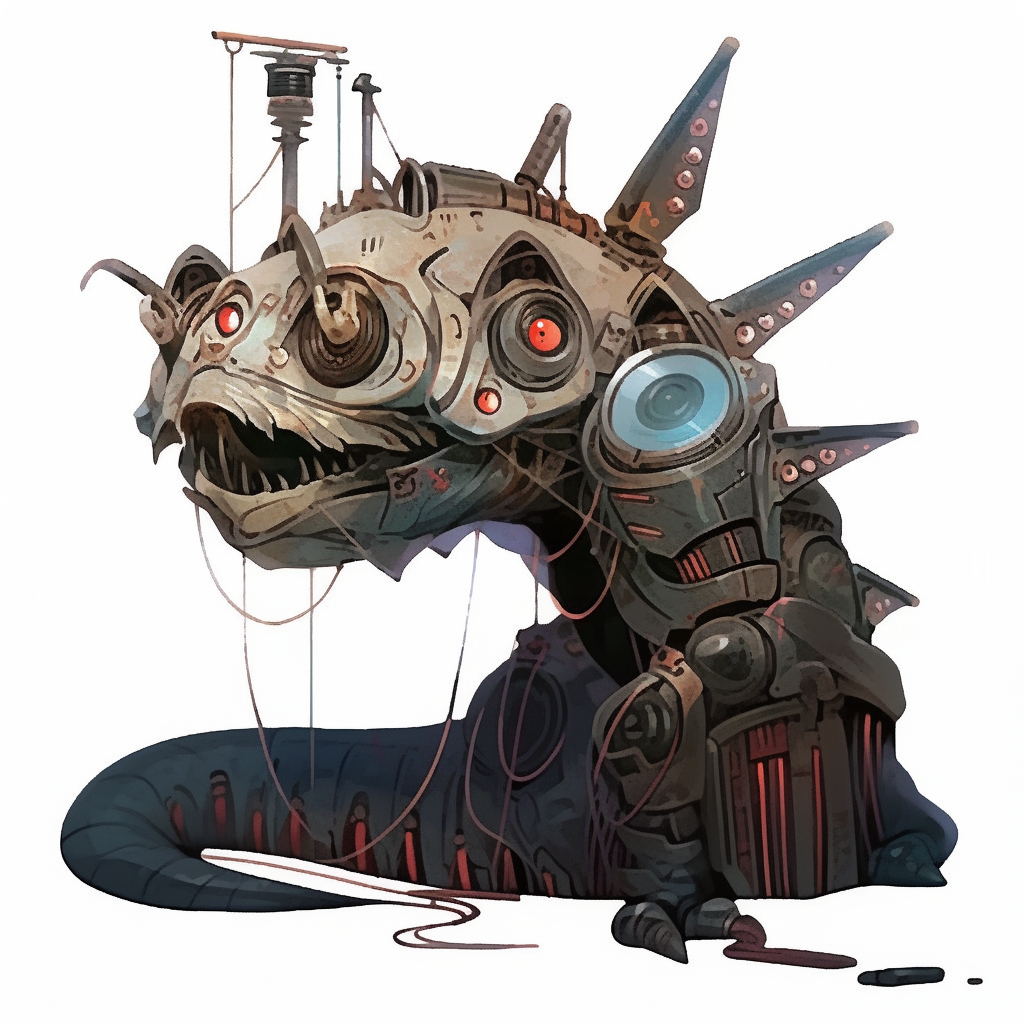
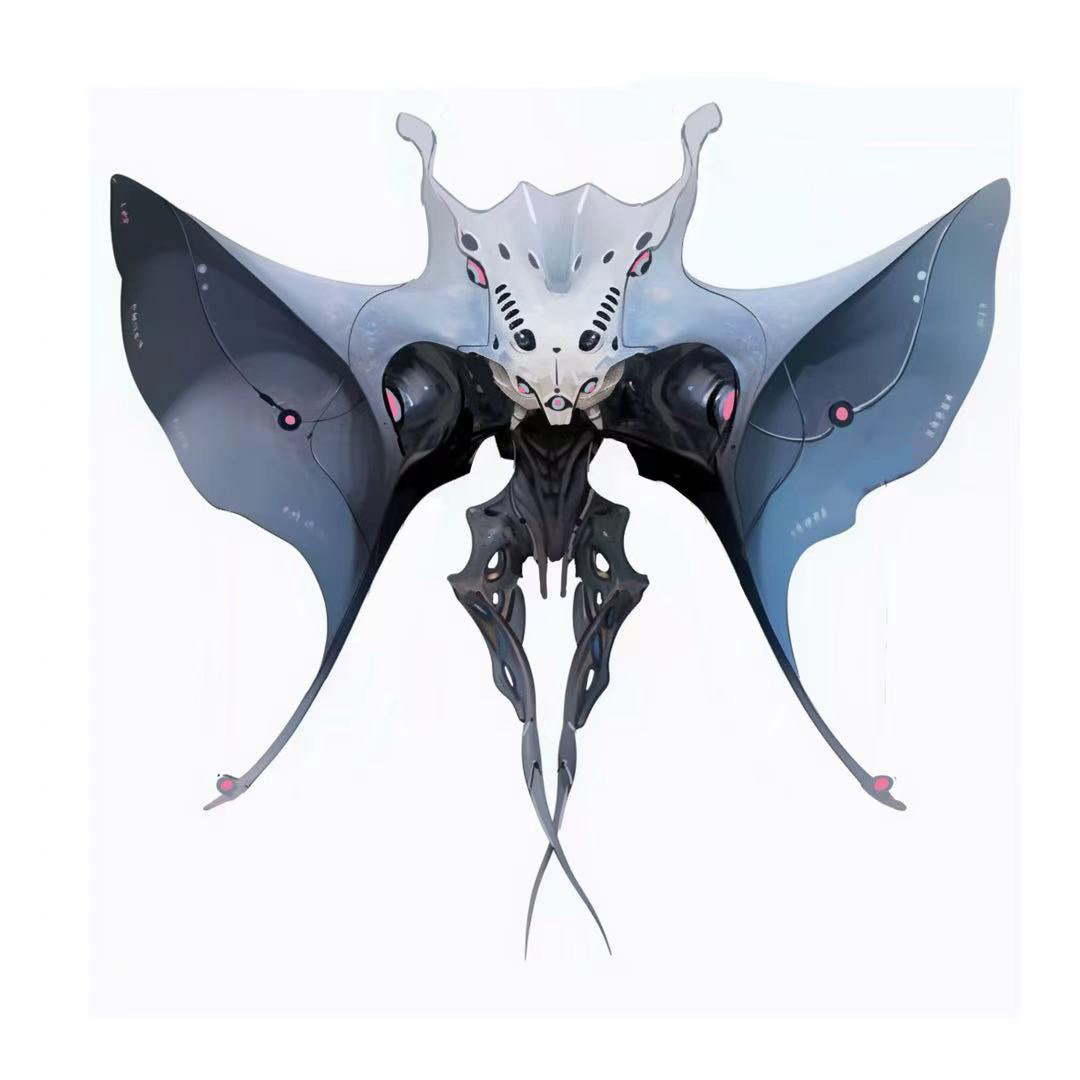
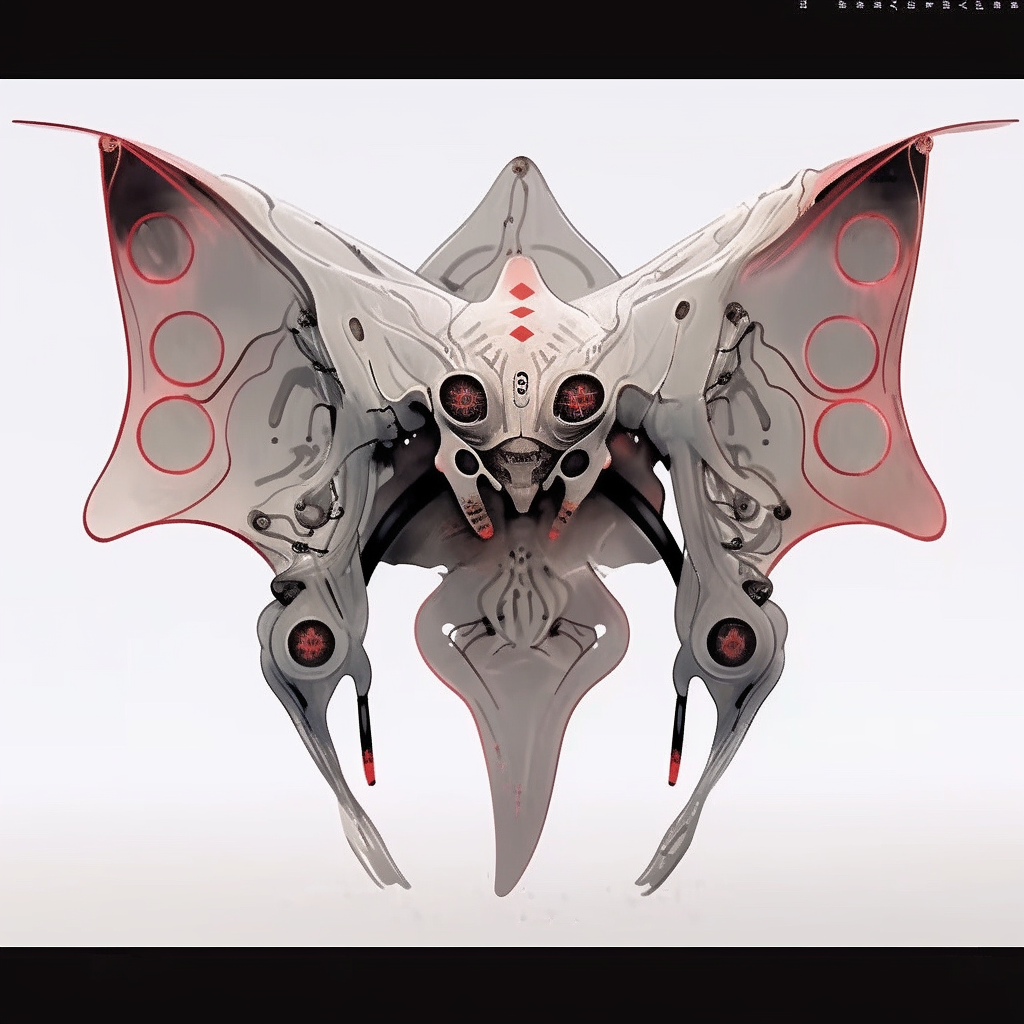
Initially, I tried using an AI tool (Midjourney) to generate monster designs. However, the results were quite uniform and lacked diversity.
More importantly, the AI-generated designs only conveyed a "monstrous" feel, but failed to evoke a sense of empathy from the audience.
Therefore, in the next design attempt, I decided to create the designs myself.
More importantly, the AI-generated designs only conveyed a "monstrous" feel, but failed to evoke a sense of empathy from the audience.
Therefore, in the next design attempt, I decided to create the designs myself.
04 Technical test
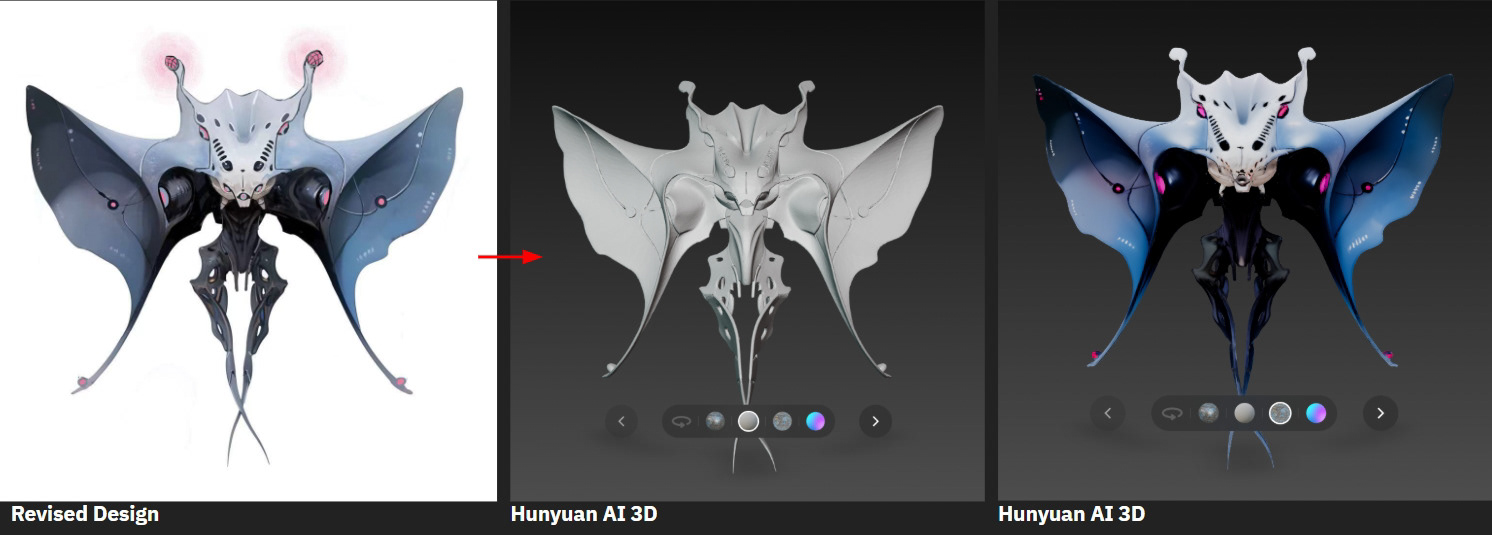
It's worth mentioning that before starting my own design process, I first conducted a technical test for the subsequent workflow—specifically AI 3D.
I discovered that Hunyuan AI 3D could be integrated into later stages, saving a significant amount of time.
This technical test was very important for me, as it meant I could allocate more time to character design.
I discovered that Hunyuan AI 3D could be integrated into later stages, saving a significant amount of time.
This technical test was very important for me, as it meant I could allocate more time to character design.
05 CONCEPT development
As I mention, the AI-generated designs doesn't work very well.
Therefore, in the second design attempt, I decided to create the designs myself and combined features from different animals to create intriguing animal-machine hybrid.
Therefore, in the second design attempt, I decided to create the designs myself and combined features from different animals to create intriguing animal-machine hybrid.
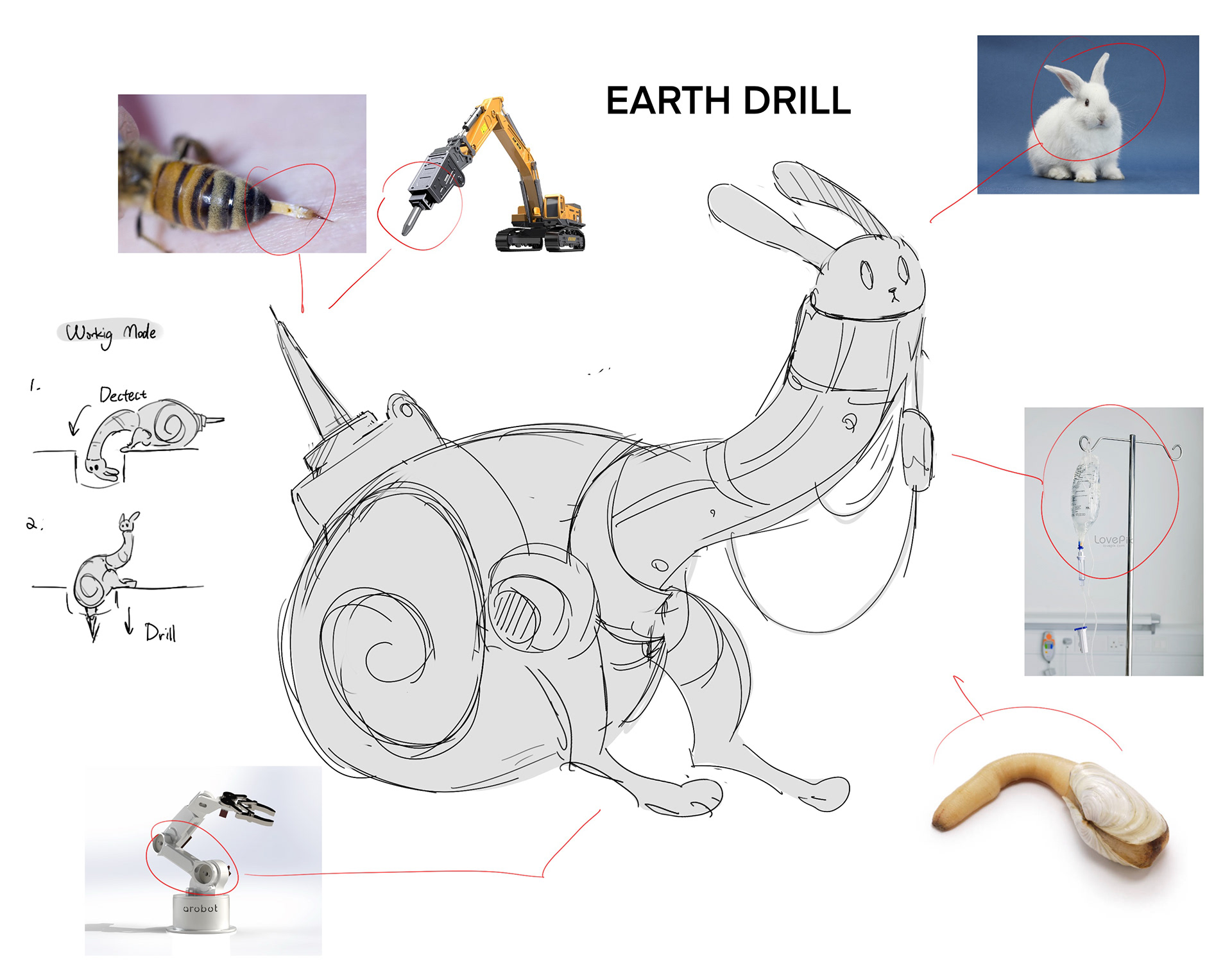
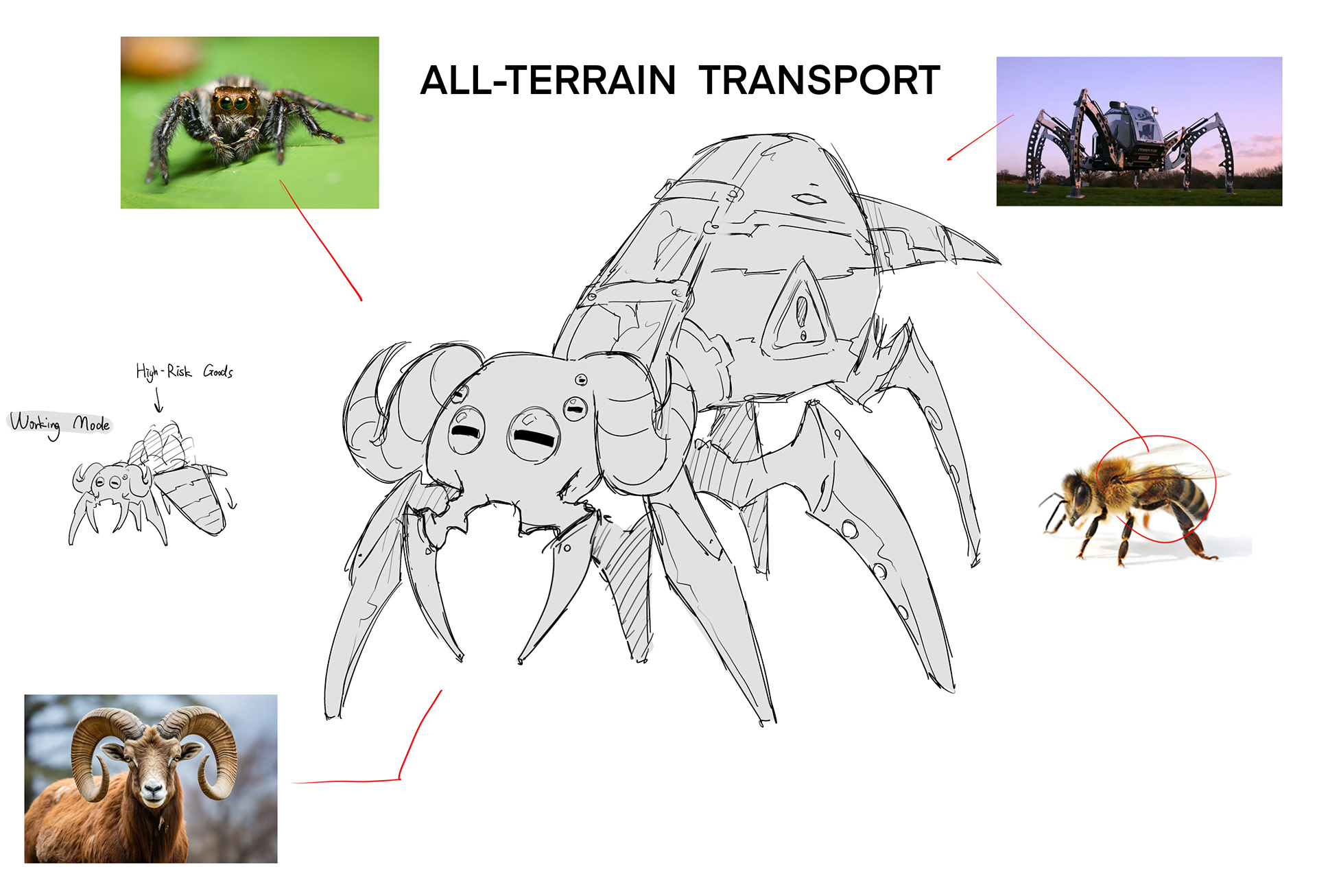
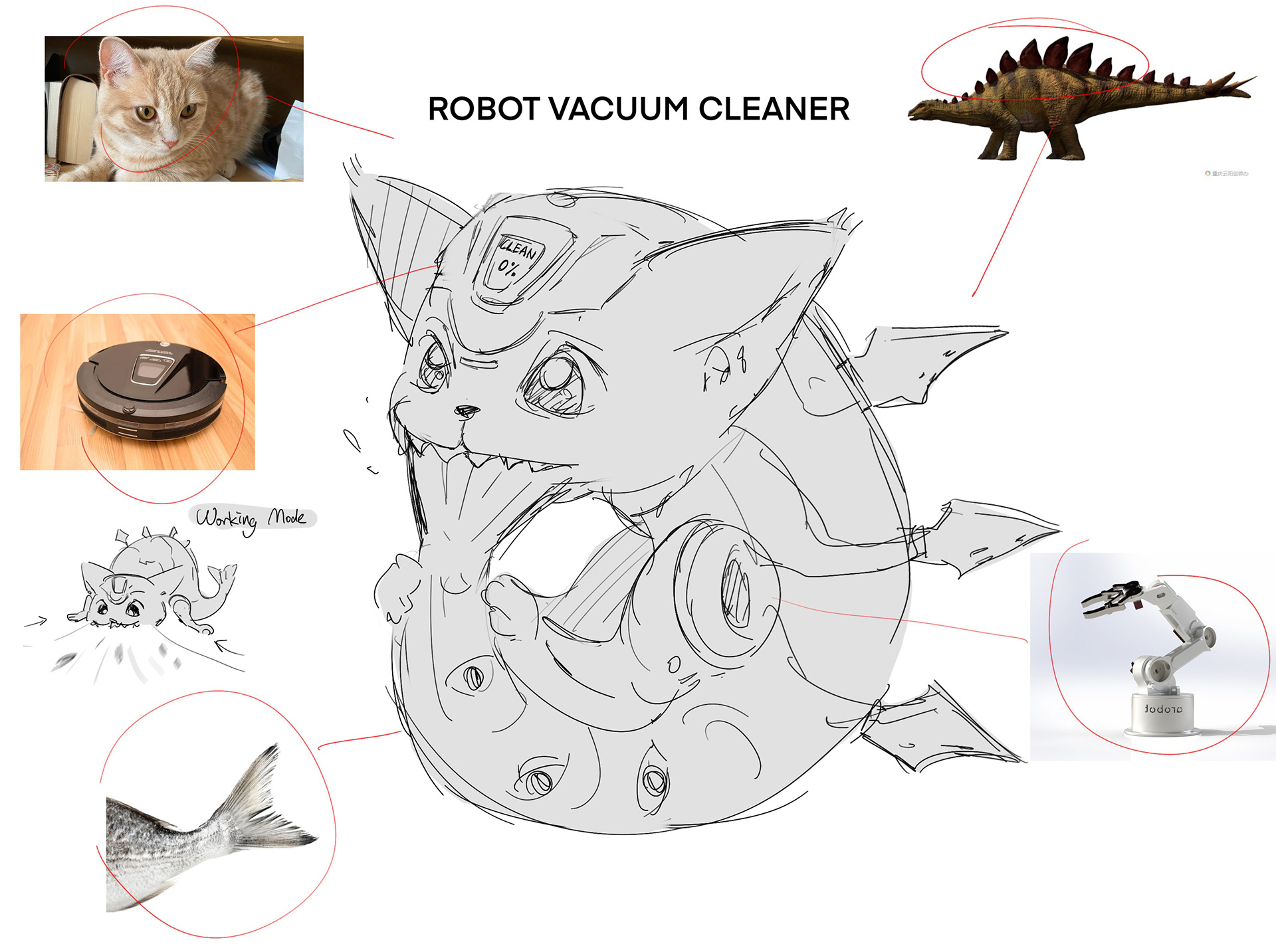
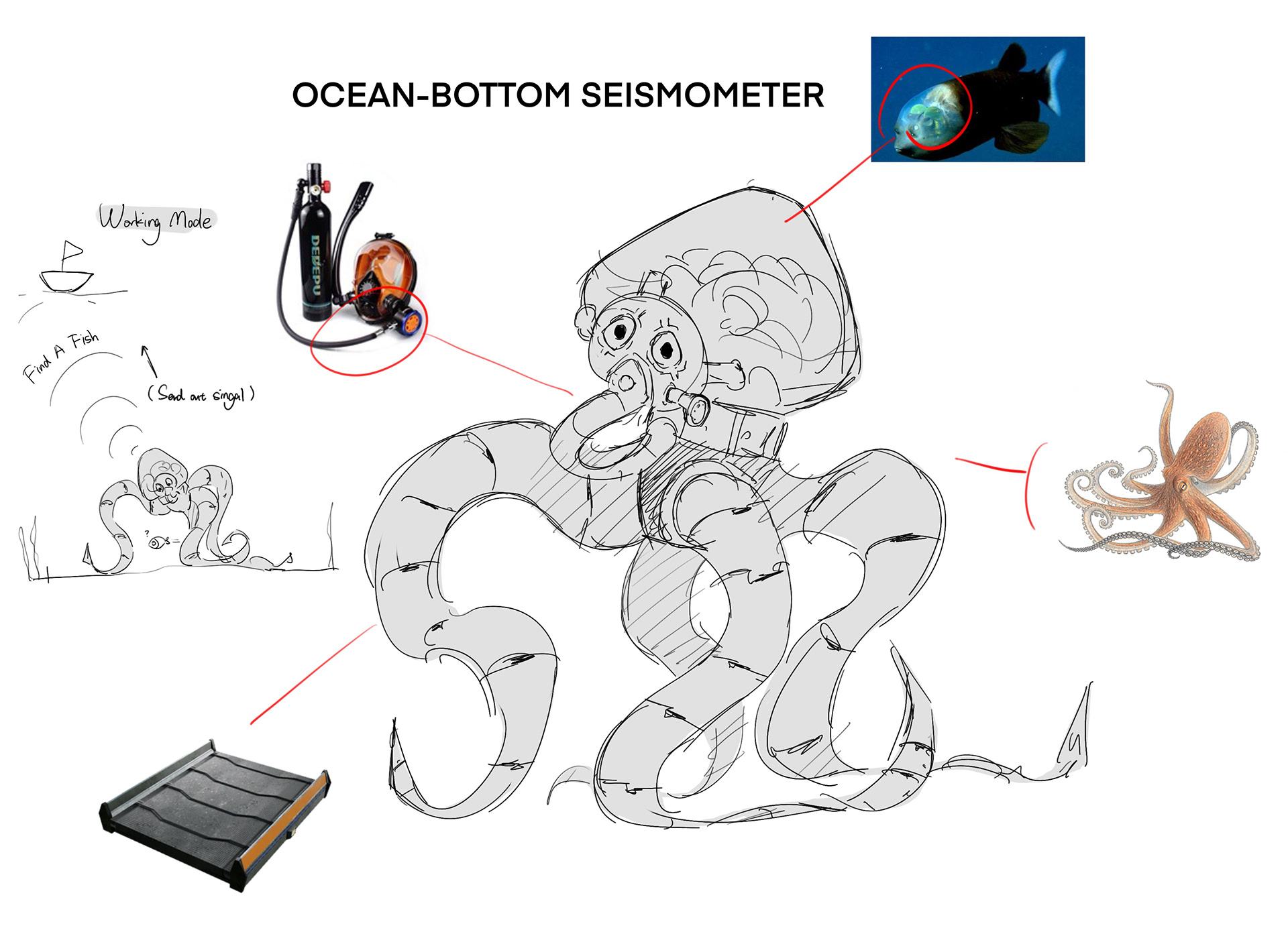
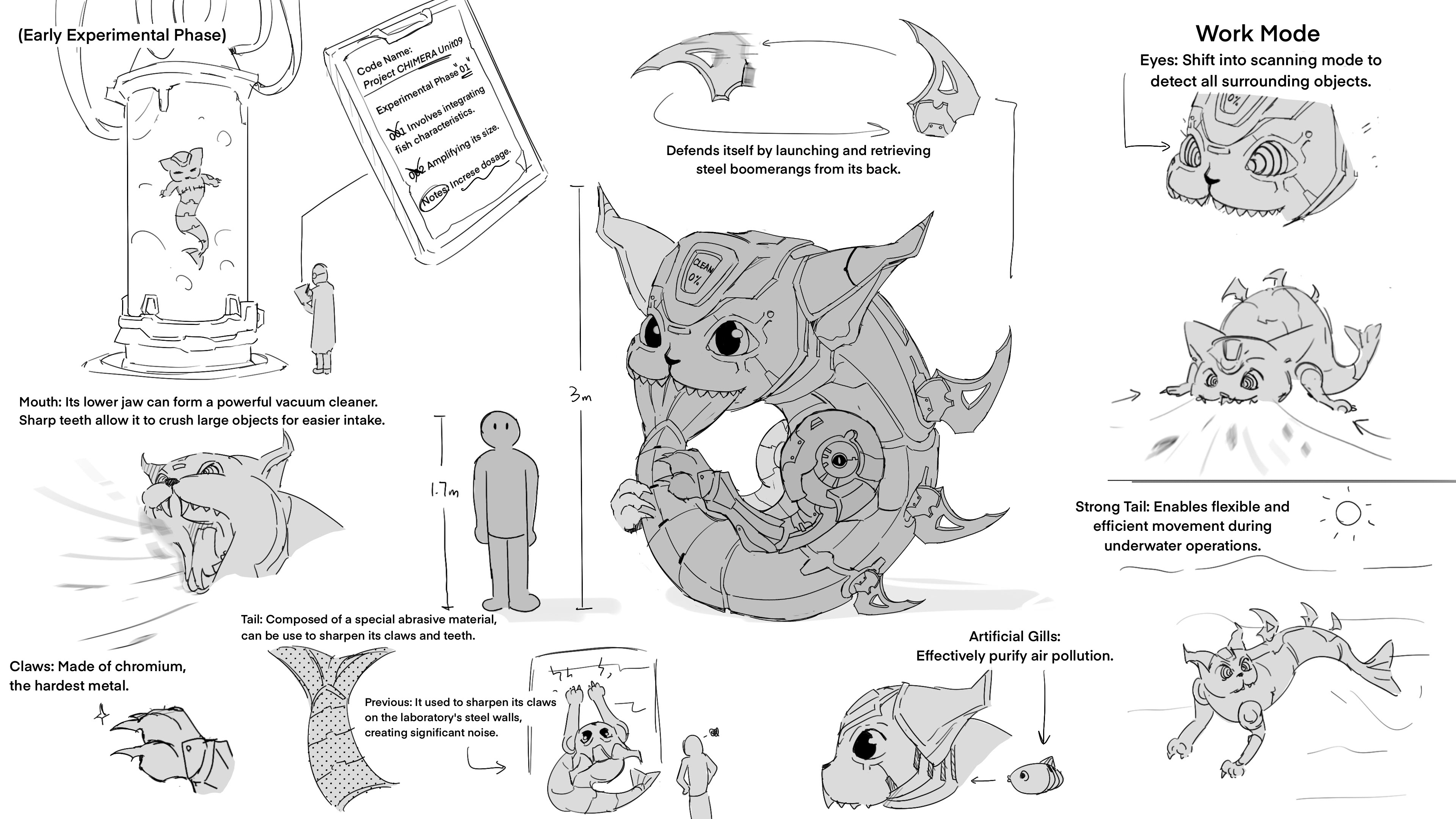
I aimed to give them cute faces but terrifying bodies, evoking a mixed feeling from the audience—such as finding them adorable yet being afraid to touch them, or appearing pitiful, arousing sympathy for the modifications made by humans.
Eventually, the third design—a cat biting its own tail—was selected by the art director, and I will continue to develop it further in the following steps.
Eventually, the third design—a cat biting its own tail—was selected by the art director, and I will continue to develop it further in the following steps.
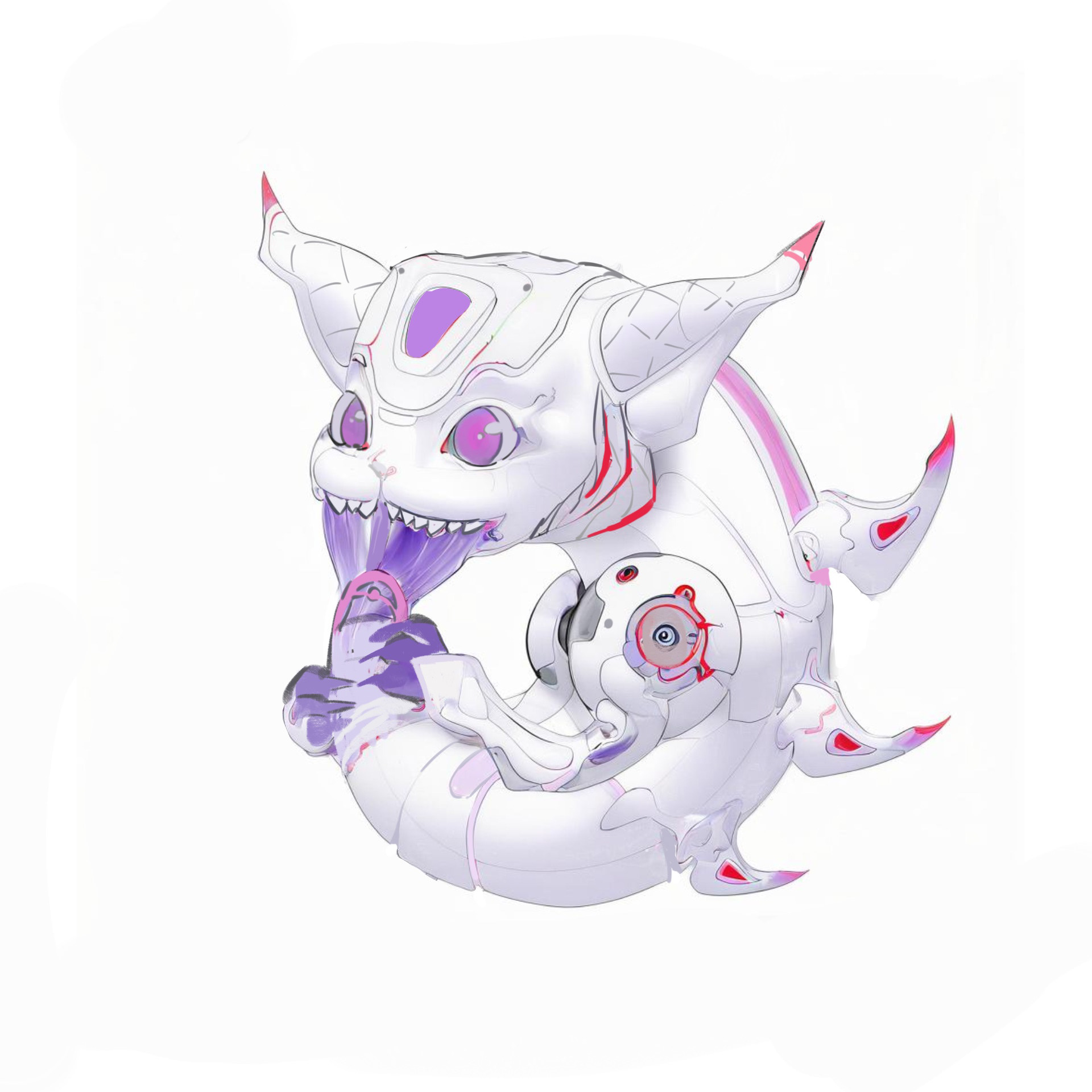
I utilized Dreamina AI to apply color to my design.
The feedback I received at this stage was:
"Change the face to a real cat face, to create more empathy."
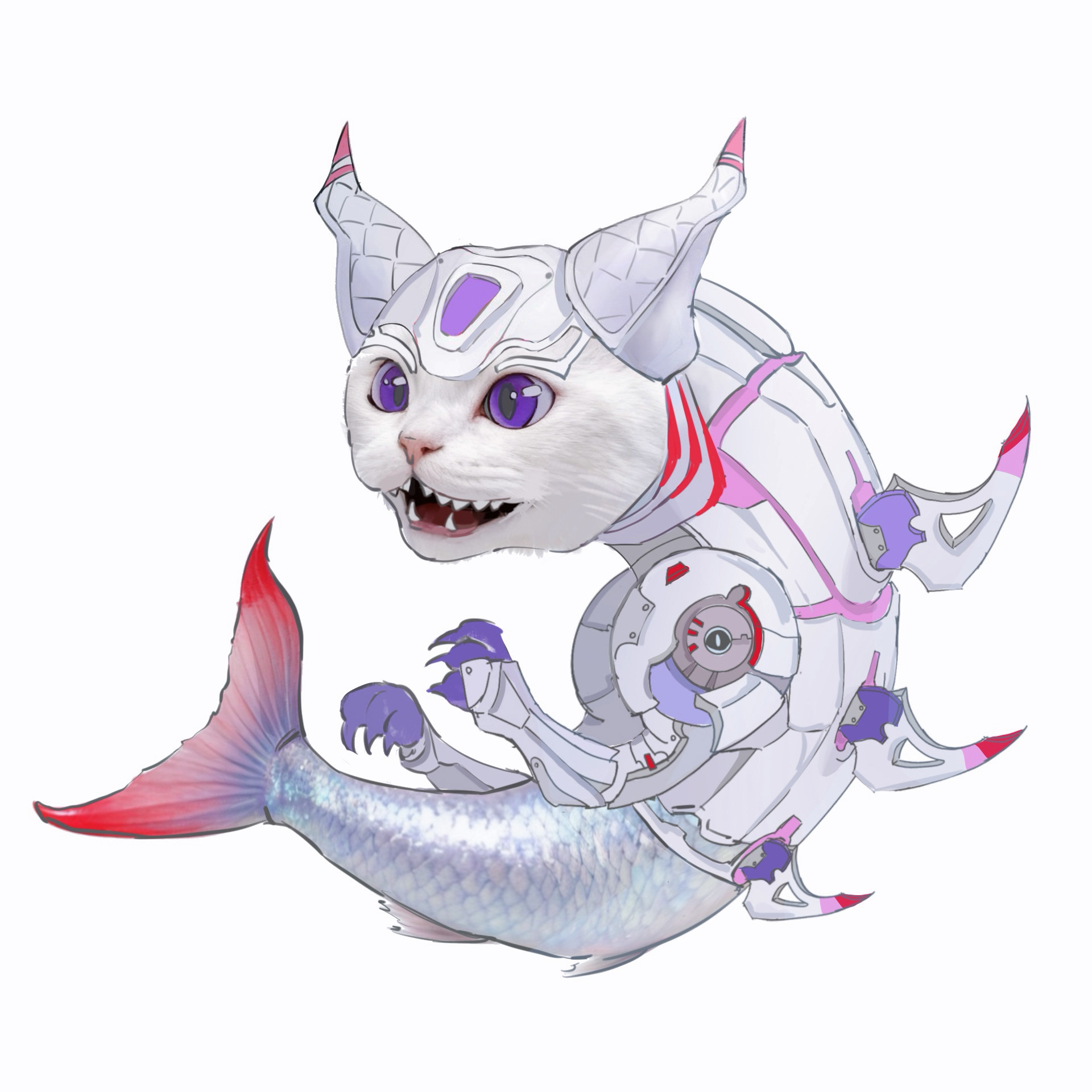
As a result, during this phase,
I modified the character's face and tail to adopt a more biological form.
06 AI Generator
After completing the rough concept sketches, I continued using Dreamina AI to generate the three-view drawings for my design.
Here are the prompts I used:
"Centered in the image is a hybrid mechanical animal. This creature is composed of a real white cat's head and a real fish tail, with only arms and no legs. Its body is covered in mechanical elements, giving it a strong mechanical structure feel. The model should have intricate details. Keep the mechanical structure and details unchanged, and generate the back view of this creature."
Here are the prompts I used:
"Centered in the image is a hybrid mechanical animal. This creature is composed of a real white cat's head and a real fish tail, with only arms and no legs. Its body is covered in mechanical elements, giving it a strong mechanical structure feel. The model should have intricate details. Keep the mechanical structure and details unchanged, and generate the back view of this creature."
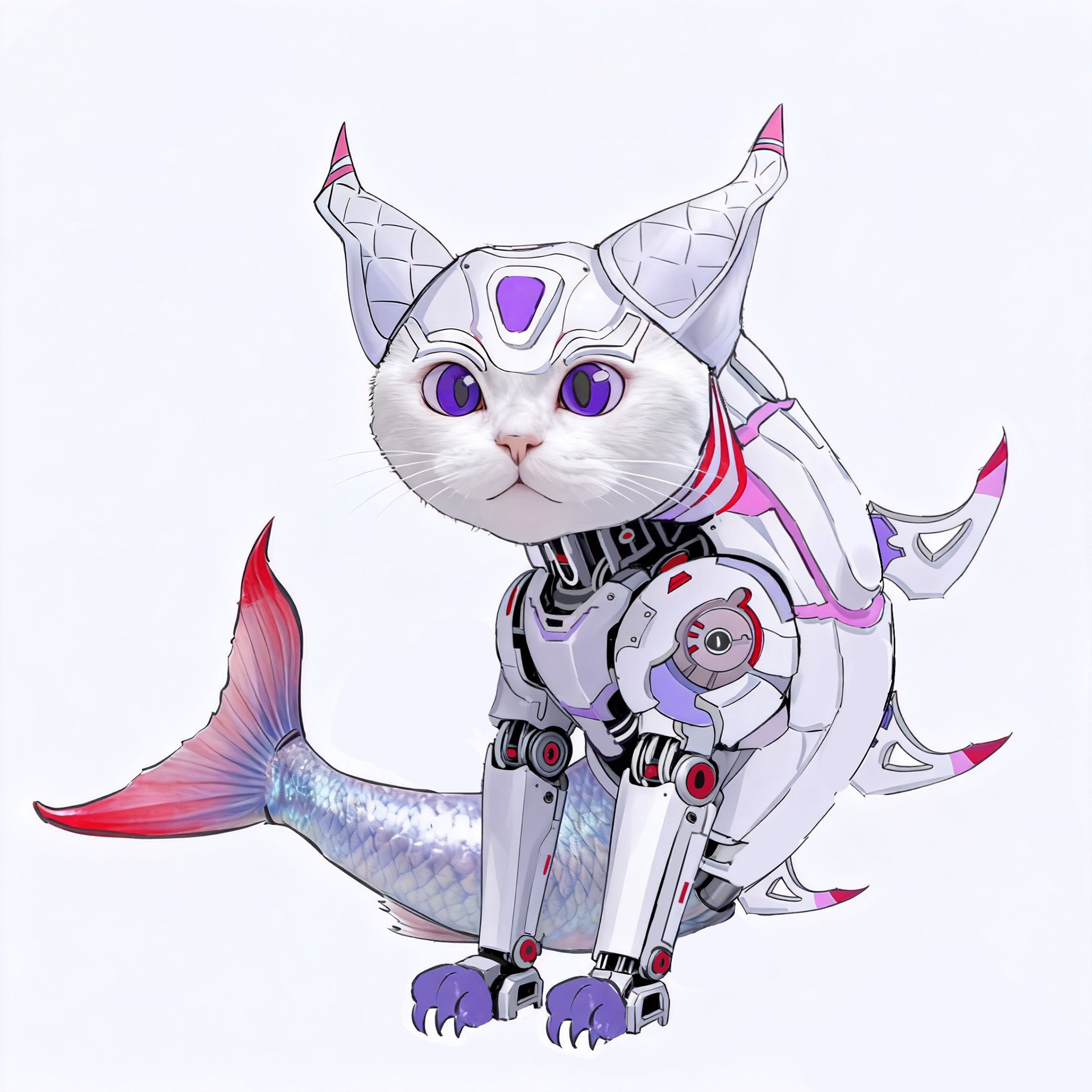
front
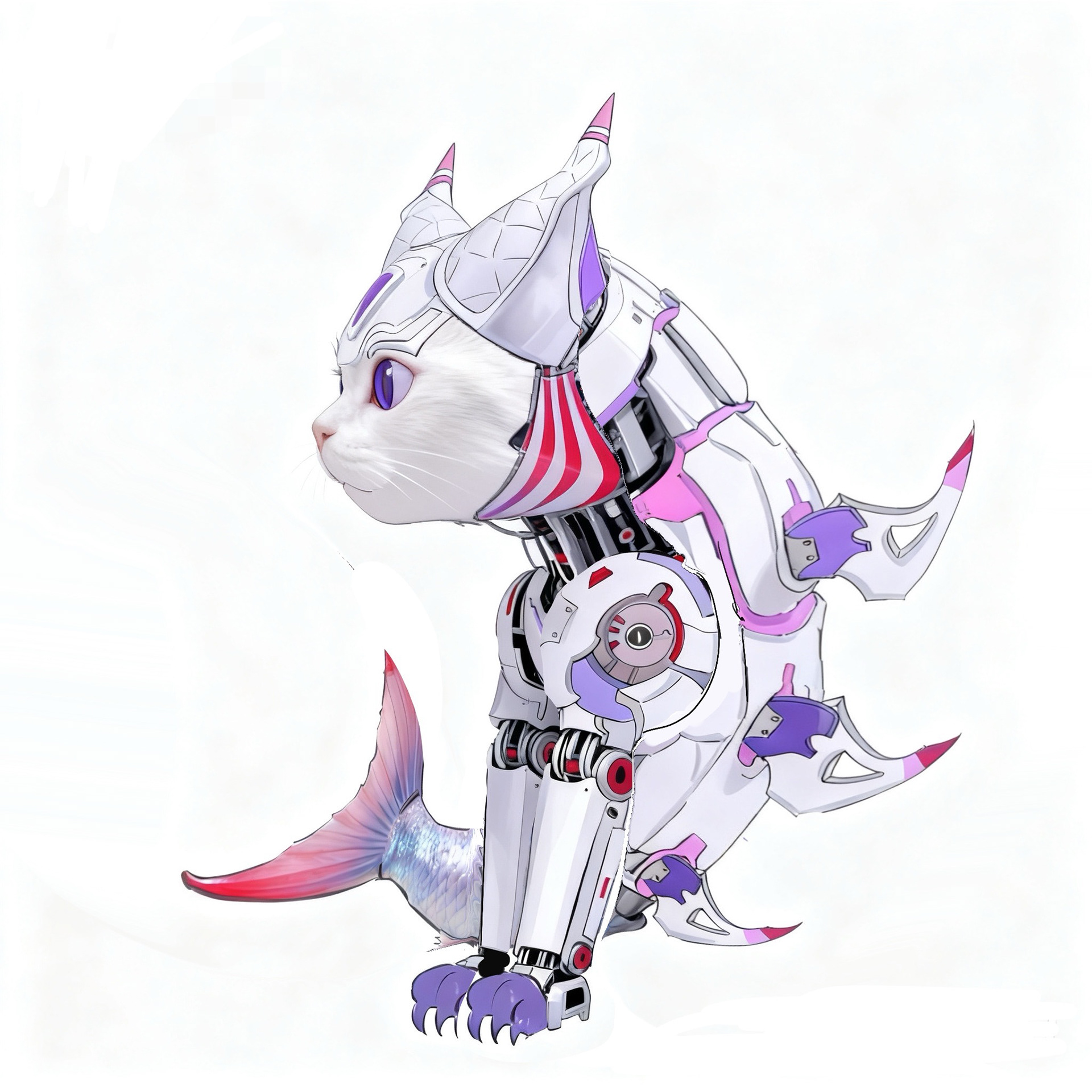
left
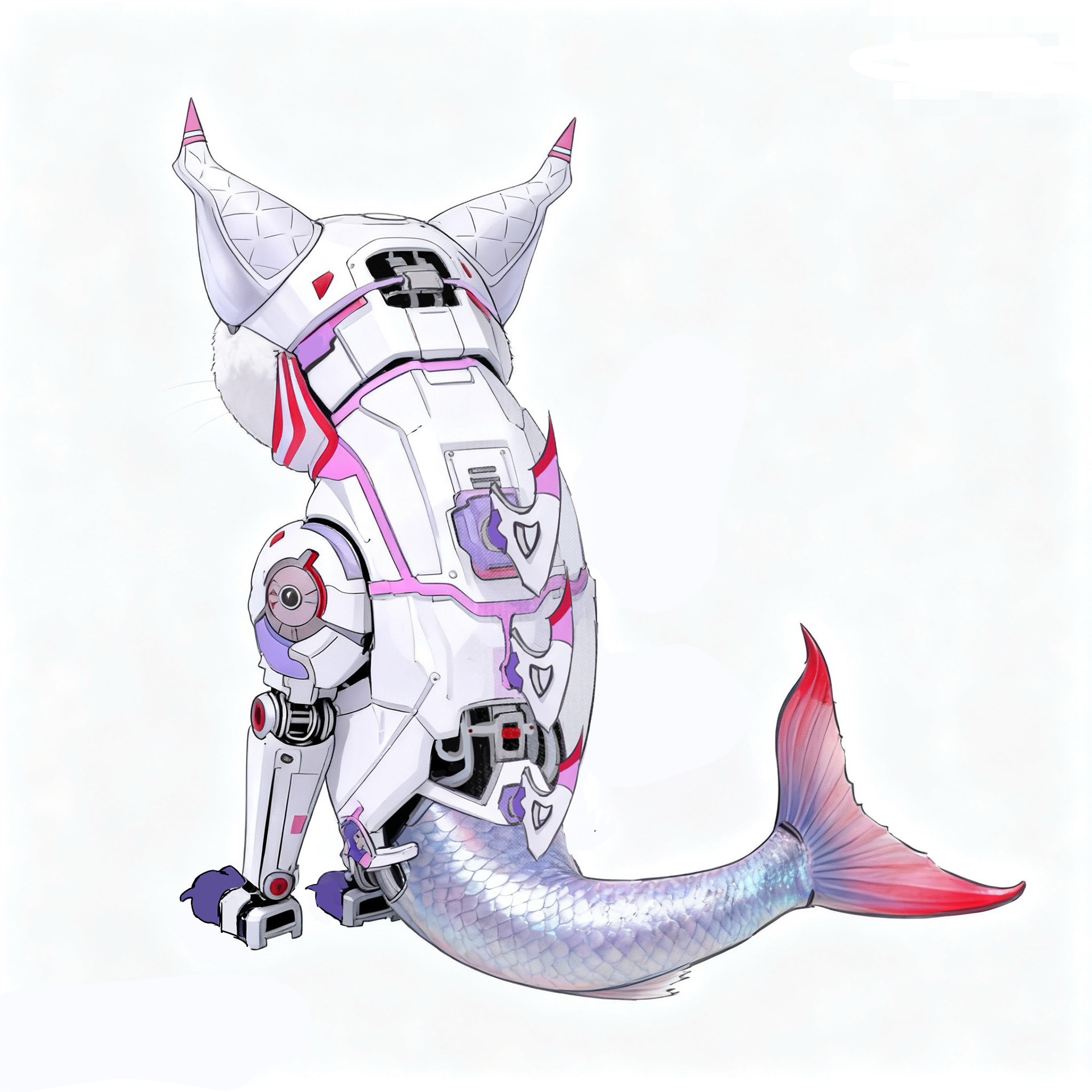
back
After this, I made some manual modifications and input the three-view drawings into Hunyuan AI to generate a 3D model.
Due to the complexity of the design, I personally feel the results were not very satisfactory.
On the left is the direct output from the AI 3D model:
Due to the complexity of the design, I personally feel the results were not very satisfactory.
On the left is the direct output from the AI 3D model:
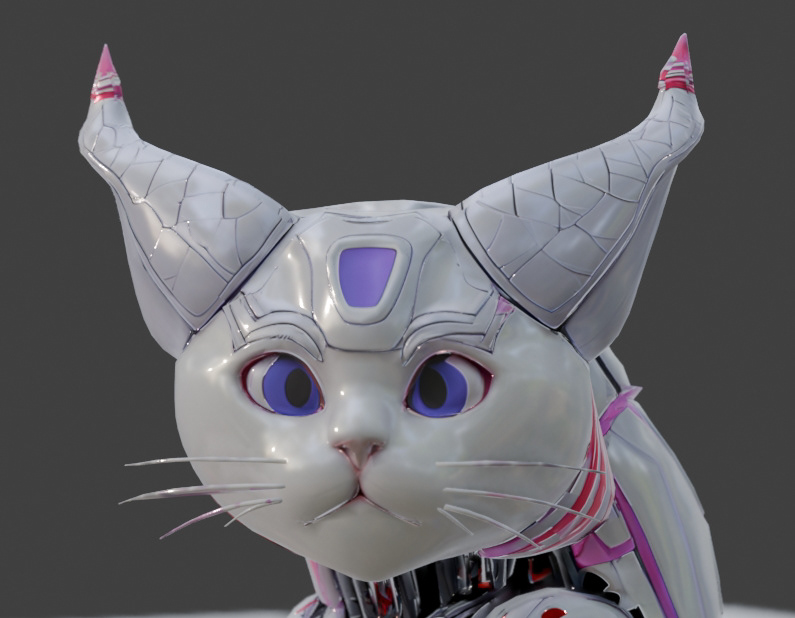
AI 3D Model
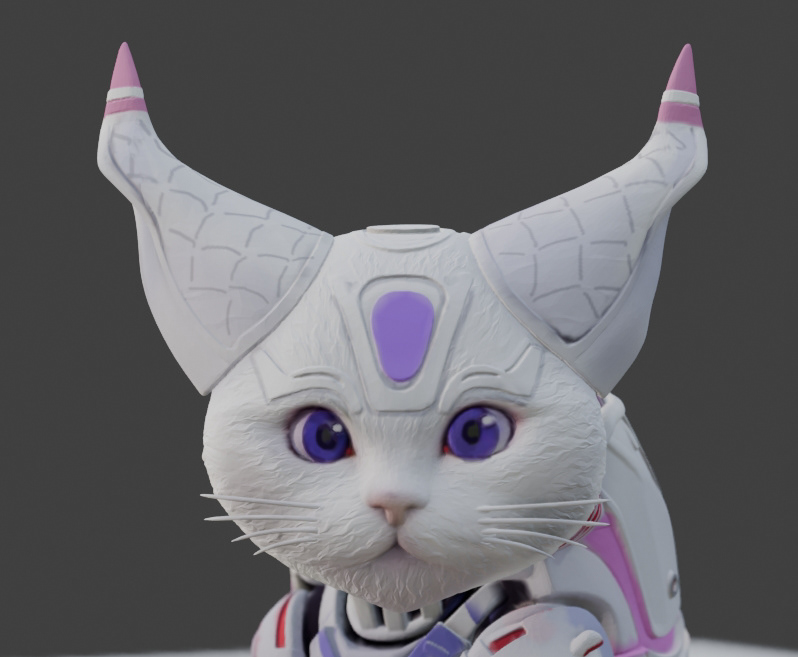
Adjusted Model
It can be seen that many textures and details are less than ideal, and the materials for the cat's head lack the biological appearance.
Therefore, I performed a lot of manual adjustments. I sculpted fine, fur-like textural details on the face and made the eyes more endearing and expressive—this adjustment can more effectively evoke empathy from the audience.
Afterwards, I also resolved some UV mapping and texture issues, and switched to a more matte version overall (this helps reduce the reflection on the model in my scene, making it closer to that of a real animal).
Therefore, I performed a lot of manual adjustments. I sculpted fine, fur-like textural details on the face and made the eyes more endearing and expressive—this adjustment can more effectively evoke empathy from the audience.
Afterwards, I also resolved some UV mapping and texture issues, and switched to a more matte version overall (this helps reduce the reflection on the model in my scene, making it closer to that of a real animal).
07 3D model & scene
Next, I imported the revised 3D model into Blender, performed rigging, and created some subtle animations.
I also constructed a 3D laboratory scene, using heavily worn materials and dim, high-contrast lighting to convey an "abandoned laboratory" atmosphere.
As for the reason of its "abandonment"—perhaps this creature broke out after destroying the lab, similar to the dinosaurs in Jurassic World, or maybe the facility was relocated due to aging equipment? This is left to the audience's imagination.
I also constructed a 3D laboratory scene, using heavily worn materials and dim, high-contrast lighting to convey an "abandoned laboratory" atmosphere.
As for the reason of its "abandonment"—perhaps this creature broke out after destroying the lab, similar to the dinosaurs in Jurassic World, or maybe the facility was relocated due to aging equipment? This is left to the audience's imagination.
Overall, I found this to be a highly interesting and challenging project. While I typically focus solely on animation, in this case study, I was responsible for the entire pipeline—from initial concept, character design, and 3D modeling, to rigging, scene setup, rendering, and final output.
Throughout the process, I explored and learned, familiarizing myself with various plugins and AI tools. It has been an immensely rewarding experience! :)
Link to project slides: Click me
Throughout the process, I explored and learned, familiarizing myself with various plugins and AI tools. It has been an immensely rewarding experience! :)
Link to project slides: Click me
Previous Case Study: Sesame Street x Netflix Next Case Study: Instructional Explainer For AI